





Lychee White Charcoal – Binchotan Style
CONTACT US
- Commercial Name: Lychee White Charcoal – Binchotan Style
- Product Code: BC-02
- Origin: Vietnam
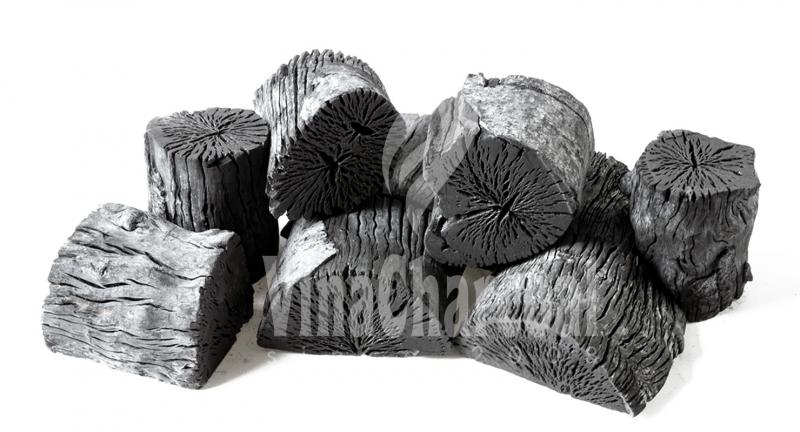
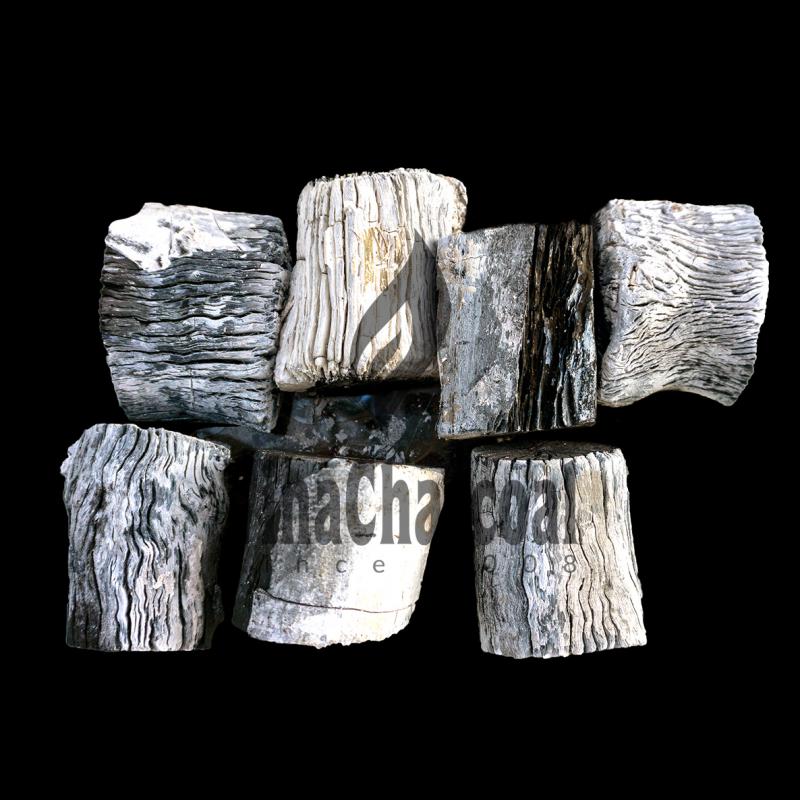
Lychee White Charcoal (Lychee Binchotan) is a premium white charcoal produced from lychee wood using Japanese Binchotan-style production techniques. Supported by abundant lychee wood resources from Northern Vietnam, it is one of the most widely produced and commercially available white charcoal products in Vietnam.
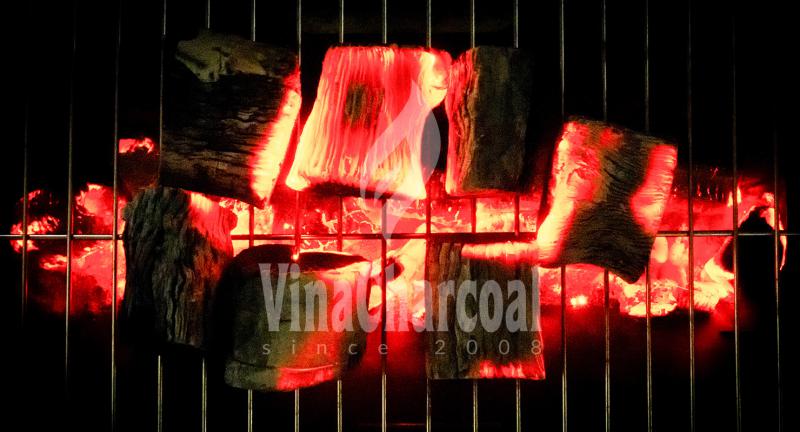
Through carbonization and high-temperature thermal refining, the charcoal develops a dense structure, high carbon content, strong heat output, and low ash generation. Once fully ignited, it produces virtually no smoke and no noticeable odor while maintaining stable heat for an extended period. The charcoal may also contribute a subtle natural fruit-wood aroma during grilling. Due to the natural characteristics of lychee wood, the charcoal typically shows lower shape uniformity and may experience slightly more breakage compared with some other white charcoal varieties.
Lychee Binchotan is widely used in Japanese and Korean restaurants, Yakiniku and Yakitori concepts, steak houses, premium BBQ operations, cooking, and specialty heating applications that require clean and stable heat performance.
Shape 80% Lump (split wood form), 20% Natural round stick
Size Diameter: 30 – 80 mm
Length: 150 – 200 mm or cut upon request
Available according to Japanese/Korean market grading standards: XL / L / M / S / SS / 3S
Fixed Carbon > 75%
Calorific Value > 7500 kcal/kg
Ash Content < 3%
Moisture < 5%
Burning Time 4 – 5 hours
Packaging
Standard Packaging
- Carton boxes: 3 – 15 kg
- Packaging design
- Private label printing
- Customized packaging specifications
- BBQ charcoal brand development support
- Supply Capacity: 150 MT/month
- MOQ: 1 × 20DC
- Container Loading Capacity:
- Approximately 8 MT / 20DC
- Approximately 19 MT / 40HC (10kg carton box packing)
- Payment Terms: TT (30% deposit) or L/C at sight
- Delivery Time: Approximately 15 days
- Loading Port: Hai Phong Port
Japan, Korea, Europe, Australia, and markets prioritizing high-quality white charcoal produced in Japanese Binchotan style.
Among these areas, Bac Giang and Hai Duong are considered the two largest and most famous lychee-growing regions in Vietnam, with total cultivation areas reaching tens of thousands of hectares. Bac Giang Province alone currently maintains approximately 29,000 hectares of lychee plantations, with annual production commonly exceeding 150,000–180,000 tons of fresh fruit. Vietnamese lychee is highly appreciated for its sweet flavor, thick flesh, and distinctive aroma, and is currently exported to many markets including Japan, Korea, Australia, the USA, the EU, and China.
Lychee trees are perennial fruit trees commonly cultivated in household gardens as well as specialized commercial farming zones. To maintain fruit yield and quality, lychee trees require annual branch pruning after each harvest season to improve canopy structure, stimulate new growth, and reduce disease risks. In addition, old or low-yield trees are regularly removed and replaced with new trees or converted to other higher-value fruit crops.
Thanks to the large cultivation area and regular pruning cycles, the lychee industry generates a relatively abundant source of wood material every year. Lychee wood is naturally hard and dense with a compact core structure, making it highly suitable for carbonization and premium charcoal production. However, lychee trunks are typically curved, heavily branched, and rough in appearance, which limits their value for industrial wood processing or furniture manufacturing.
Most harvested lychee wood is therefore utilized as fuel wood, processed into sawdust, or carbonized for charcoal and Binchotan white charcoal production. Due to its dense hardwood characteristics and relatively high wood density, charcoal produced from lychee wood generally develops a hard structure, high heat output, and stable long-lasting burning performance, making it especially suitable for premium BBQ charcoal and Japanese-style Binchotan white charcoal products.
Standard Packaging
- Carton boxes: 3 – 15 kg
- Packaging design
- Private label printing
- Customized packaging specifications
- BBQ charcoal brand development support
- Supply Capacity: 150 MT/month
- MOQ: 1 × 20DC
- Container Loading Capacity:
- Approximately 8 MT / 20DC
- Approximately 19 MT / 40HC (10kg carton box packing)
- Payment Terms: TT (30% deposit) or L/C at sight
- Delivery Time: Approximately 15 days
- Loading Port: Hai Phong Port
Japan, Korea, Europe, Australia, and markets prioritizing high-quality white charcoal produced in Japanese Binchotan style.
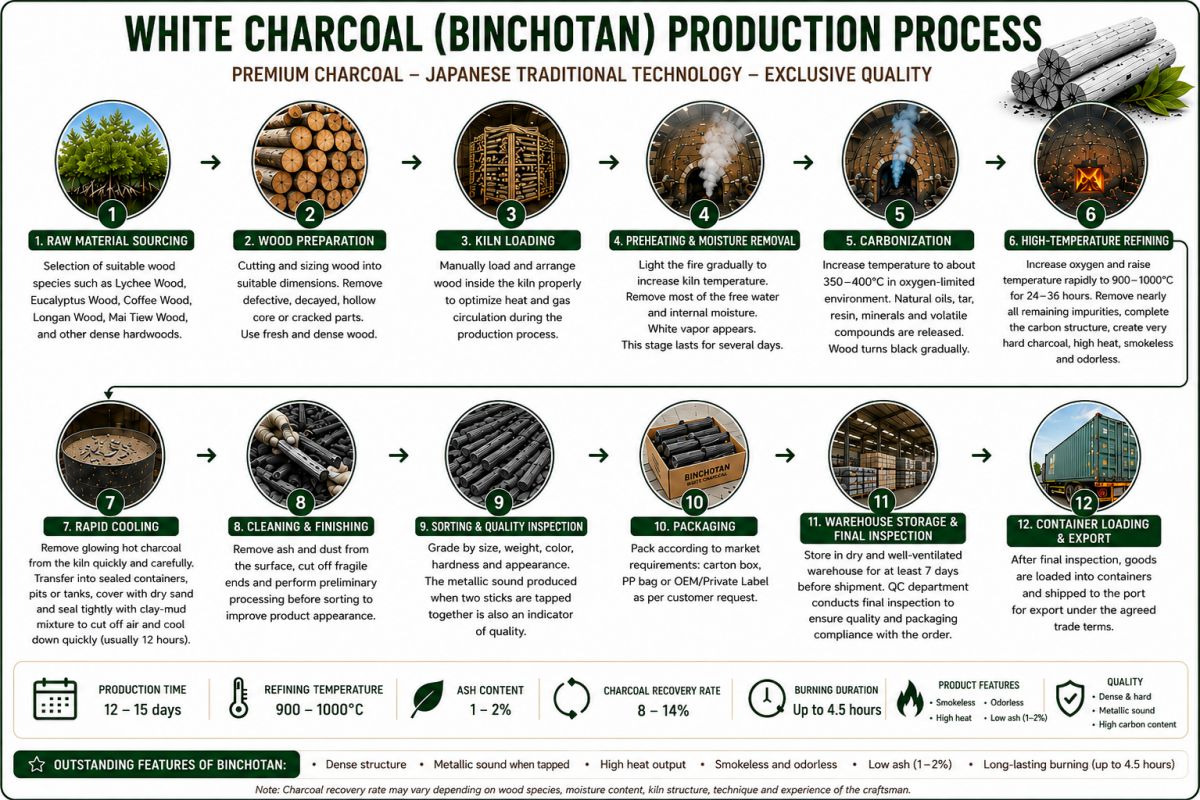
Overview
White Charcoal (Binchotan) is a premium charcoal product originating from Japan and developed from the traditional charcoal-making techniques practiced by craftsmen in the Kishu region (present-day Wakayama Prefecture) during the Edo Period (1603–1868).
Unlike conventional charcoal, which only undergoes carbonization at approximately 350–400°C, Binchotan is further refined at extremely high temperatures ranging from 900–1000°C. This additional refining stage removes almost all remaining moisture, wood tar, natural oils, and volatile compounds from the charcoal structure while significantly increasing carbon content, density, hardness, and combustion performance.
In Vietnam, this technique has been adapted to produce White Charcoal from various suitable wood species, including Lychee Wood, Eucalyptus Wood, Coffee Wood, Longan Wood, Mai Tiew Wood, and other dense hardwood materials. The finished product is characterized by its dense structure, metallic ringing sound when two charcoal sticks are tapped together, high heat output, smokeless and odorless performance, low ash content (typically 1–2%), and extended burning duration of up to 4.5 hours.
The production of White Charcoal requires a high level of craftsmanship, strict temperature control, and extensive practical experience throughout the manufacturing process.
Step 1. Raw Material Sourcing
Raw materials are selected from wood species suitable for White Charcoal production, including Lychee Wood, Eucalyptus Wood, Coffee Wood, Longan Wood, Mai Tiew Wood, and other dense hardwood species.
Depending on the product category, the wood may originate from fruit orchards, plantation forests, or other appropriately managed raw material regions.
Step 2. Wood Preparation
The wood is cut into billets of suitable length and diameter according to kiln specifications.
Logs affected by decay, severe cracking, insect damage, or hollow cores are removed to ensure consistent product quality.
For White Charcoal production, freshly harvested and dense wood is generally preferred because it produces harder and more uniform charcoal after the refining process.
Step 3. Kiln Loading
The prepared wood is manually loaded into the kiln according to the kiln design and the experience of the charcoal craftsmen.
Proper stacking helps maintain efficient heat and gas circulation throughout the production cycle.
Step 4. Preheating & Moisture Removal
The kiln is gradually heated to increase the internal temperature in a controlled manner.
During this stage, most free water and moisture contained within the wood are slowly removed. Escaping water vapor typically creates the characteristic white smoke observed during the early stages of production.
This stage may continue for several days depending on the wood species and kiln capacity.
Step 5. Carbonization
The temperature is gradually increased to approximately 350–400°C under oxygen-limited conditions.
Natural oils, wood tar, minerals, and volatile organic compounds are progressively removed from the wood structure. During this stage, the wood gradually changes from its natural color to the characteristic black appearance of charcoal.
This process forms the basic charcoal structure before the final refining stage.
Step 6. High-Temperature Refining
This is the most important stage of the entire White Charcoal production process.
After carbonization is completed, the kiln openings are adjusted to increase airflow and oxygen supply to the combustion chamber. The kiln temperature is then rapidly increased to approximately 900–1000°C over a period of 24–36 hours.
At these extremely high temperatures, nearly all remaining moisture, wood tar, natural oils, and volatile compounds are removed. The carbon structure is further refined, resulting in exceptionally hard charcoal with high heat output, virtually no smoke, and almost no odor.
The timing of this stage is determined largely by the experience of the craftsmen. If the process is stopped too early, the charcoal may not reach its full quality potential. If continued for too long, excessive burn-off may reduce both yield and product quality.
The average white charcoal recovery rate ranges from approximately 8-14%, meaning that every 100 kg of raw wood typically yields around 8-14 kg of finished charcoal.
Step 7. Rapid Cooling
After the refining stage is completed, the glowing hot charcoal is carefully removed from the kiln while still at extremely high temperatures.
This operation requires considerable skill and experience, as dropping the charcoal or exposing it too abruptly to temperature changes may cause cracking or breakage.
The charcoal is immediately transferred into sealed drums, pits, tanks, or other enclosed cooling systems. Dry sand is then added to completely cover the charcoal, and the containers are tightly sealed with clay or mud mortar to isolate the charcoal from oxygen. This process extinguishes combustion and rapidly reduces the temperature while preserving the charcoal structure and appearance.
The cooling process typically takes around 12 hours before the charcoal can be handled safely.
Step 8. Cleaning & Finishing
The charcoal is cleaned to remove loose ash and surface dust. Fragile end sections may be trimmed before grading and packaging.
This stage improves product appearance and facilitates subsequent handling and packaging operations.
Step 9. Sorting & Quality Inspection
The charcoal is graded according to size, weight, color, hardness, and overall appearance.
For many Binchotan products, the metallic ringing sound produced when two charcoal sticks are tapped together is also considered one of the indicators of quality and carbonization performance.
Step 10. Packaging
Products are packed according to market requirements and customer specifications.
White Charcoal is commonly packed in cartons, PP bags, or OEM / Private Label packaging formats.
Step 11. Warehouse Storage & Final Inspection
Finished products are stored in dry and well-ventilated warehouse conditions for a minimum of 7 days before shipment.
A final quality inspection is conducted to verify product quality and packaging specifications according to the order requirements.
Step 12. Container Loading & Export
After final approval, the products are loaded into containers and transported to the port for export according to the agreed international trade terms.
Container loading capacity may vary significantly depending on the charcoal type, dimensions, and packaging format.
THALOCA’s production network is strategically located near key raw-material regions throughout Vietnam to optimize transportation costs and maintain a stable supply chain. Main production areas include Hung Yen, Yen Bai, Vinh Long, Can Tho, Binh Phuoc, and Ca Mau.
Yes. THALOCA welcomes customers, partners, and inspection agencies to visit our facilities. We encourage customers to evaluate our production capacity, quality control system, packaging process, and supply capability before establishing long-term cooperation.
THALOCA exports to Japan, South Korea, Australia, New Zealand, Saudi Arabia, UAE, Qatar, Kuwait, the United Kingdom, Russia, Spain, Turkey, the United States, and other international markets.
Yes. Free product samples are available for quality evaluation. International courier charges are usually borne by the customer or negotiated case by case.
THALOCA supplies five main product groups: Wood Charcoal, Sawdust Charcoal, Coconut Charcoal Products, Binchotan-Style White Charcoal, and Household Biomass Fuels such as Wood Pellets and Wood Sawdust Briquettes.
Each product has unique characteristics depending on its raw material and production technology. Wood charcoal is made from natural firewood. Sawdust charcoal offers high calorific value and long burning time. Coconut charcoal is ideal for BBQ and shisha applications. Binchotan is the premium category with high carbon content, almost no smoke, minimal odor, and exceptional burning performance.
Depending on the product and market requirements, THALOCA can provide technical specifications, laboratory test reports, FSC, SGS, Vinacontrol, and other certifications requested by customers.
Yes. We cooperate with SGS and other independent inspection organizations designated by customers during production, before packing, or before container loading.
Since 2008, THALOCA has been supplying charcoal and biomass fuel products to customers across Japan, South Korea, Australia, the Middle East, Europe, and many other international markets.
Over the years, we have received a wide range of questions regarding products, quality standards, OEM services, export documentation, payment terms, logistics, and ordering procedures. To help customers quickly find the information they need, we have compiled the most frequently asked questions below.
If you cannot find the answer you are looking for, please feel free to contact the THALOCA team. We are always ready to provide support and recommend the most suitable solution for your business needs.