





BBQ Coconut Briquette Charcoal (Standard Grade)
CONTACT US
- Commercial Name: BBQ Coconut Briquette Charcoal – Standard Grade
- Product Code: CB-02
- Origin: Vietnam
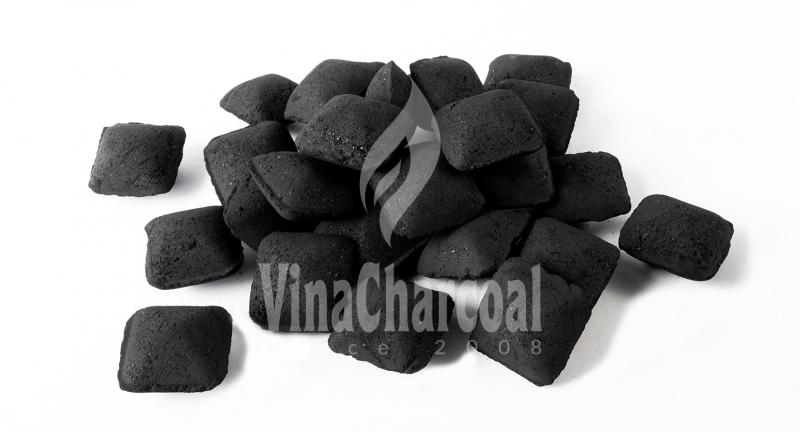
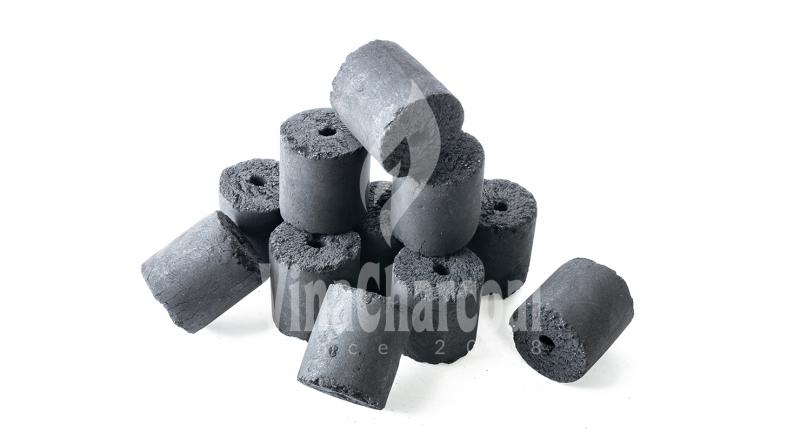
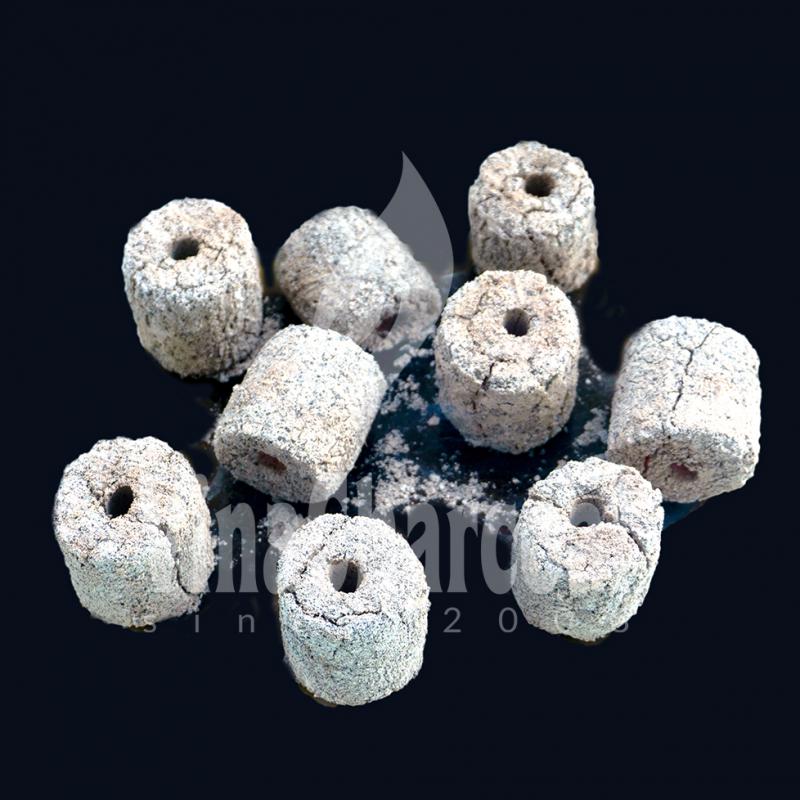
BBQ Coconut Briquette Charcoal is a briquetted charcoal product manufactured from carbonized coconut shell charcoal combined with a small proportion of natural vegetable starch to provide binding strength during the briquetting process. Thanks to its high-carbon raw material and dense briquette structure, the product delivers stable combustion, reliable heat output, and efficient performance for BBQ applications.
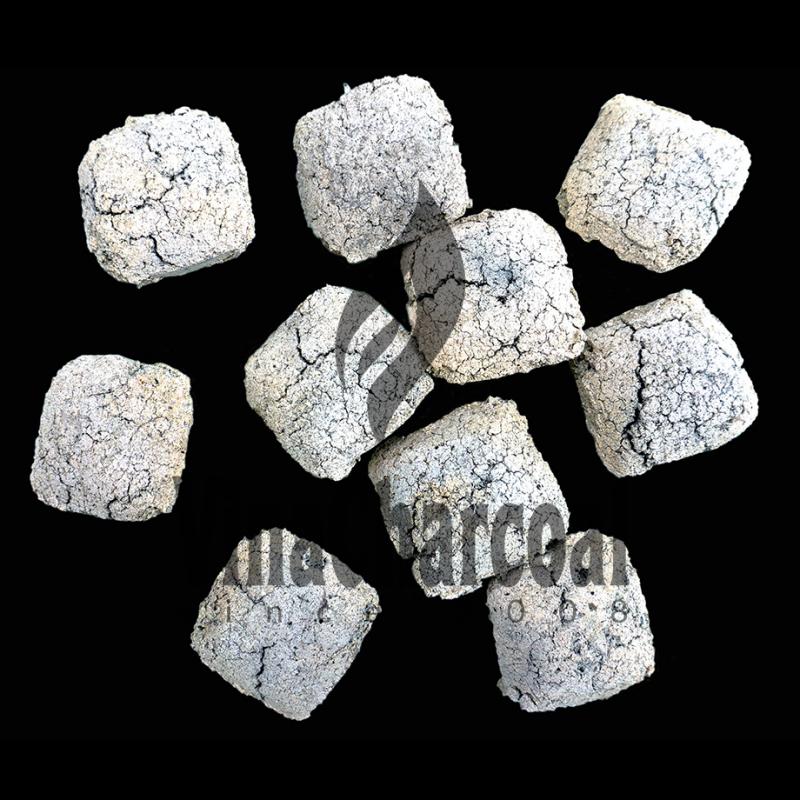
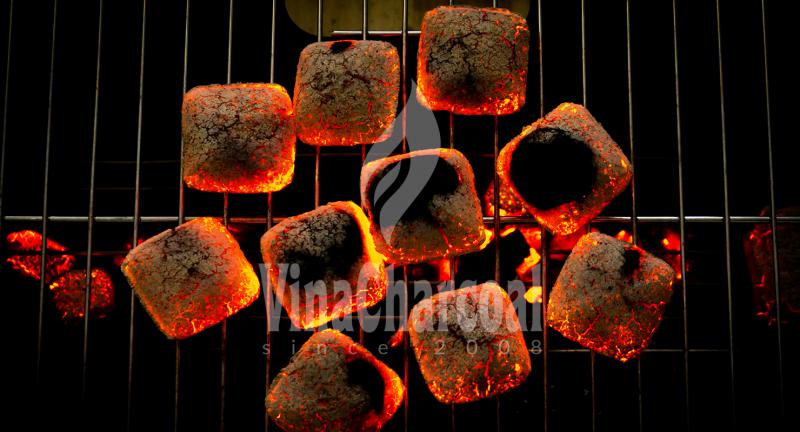
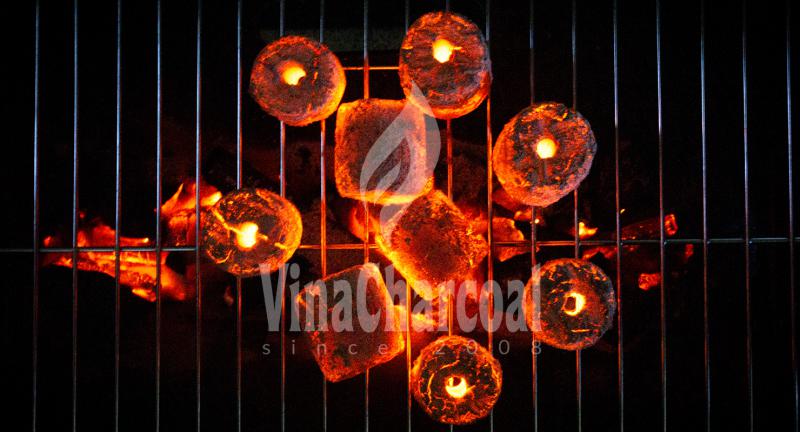
The charcoal features a hard and durable structure that helps minimize breakage during transportation, storage, and use. During combustion, it provides stable heat, low smoke, low odor, low ash generation, and minimal sparking. Its user-friendly performance and consistent burning characteristics make it suitable for both household and commercial BBQ operations.
BBQ Coconut Briquette Charcoal is widely used for family BBQ, grilling restaurants, picnics, camping, outdoor cooking, and other food-grilling applications that require a clean and reliable fuel source. The product can be manufactured in various shapes, including Cylinder, Hexagonal, Pillow, Finger, Ball, and other customized designs according to market requirements.
Shape Cylinder / Hexagonal / Pillow / Finger
Fixed Carbon ~57–60%
Calorific Value 5700–6000 kcal/kg
Ash Content < 15%
Moisture < 8%
Burning Time 1.5 – 2 hours
OEM:
Custom sizes and shapes are available upon request.
Packaging
Retail Packaging
- 1 kg PE bag
- 3 kg paper bag / carton box
- 4 kg paper bag / carton box
- 5 kg paper bag / carton box
- 3–10 kg PP/BOPP bags
- 10 – 18 kg carton boxes
- 10 – 20 kg PP bags upon request
- Packaging design
- Private label printing
- Customized packaging specifications
- BBQ charcoal brand development support
Supply Information
- Supply Capacity: 300 MT/month
- MOQ: 1 × 20FT
- Container Loading Capacity:
- 16 MT / 20FT
- 26 MT / 40HC
- Payment Terms: TT (30% deposit) or L/C at sight
- Delivery Time: Approximately 15 days
- Loading Port: Ho Chi Minh Port
Europe, Japan, Taiwan, Russia, the USA, BBQ retail markets, supermarket chains, and markets prioritizing clean BBQ charcoal with competitive pricing.
Vietnam is a tropical country with highly favorable conditions for coconut cultivation, especially in the Mekong Delta and southern coastal provinces such as Ben Tre, Tra Vinh, Vinh Long, and Tien Giang. In these regions, vast coconut plantations stretch across approximately 200,000 hectares, providing abundant raw materials for the food processing, cosmetics, and coconut-related industries.
Within the coconut value chain, coconut shell is considered one of the most valuable by-products for the carbonization industry. Coconut shell has a hard structure, high density, and excellent carbon-forming capability after the carbonization process. After being collected from coconut processing facilities, the shells are selected, cleaned, and carbonized to produce coconut shell charcoal. The collection and recycling of coconut shell waste also contribute to a cleaner environment while creating useful and environmentally friendly products such as activated carbon, coconut briquette charcoal, carbon powder for cosmetic and medical industries, and other carbon-based materials.
For BBQ coconut briquette production, coconut shell charcoal is typically carbonized at an appropriate level to achieve high heat output, stable burning performance, and low ash content suitable for BBQ grilling and domestic heating applications. Compared with raw materials used for Shisha charcoal, the carbonization standards for BBQ charcoal are generally more flexible while still maintaining essential requirements for cleanliness, hardness, and combustion efficiency.
After carbonization, the coconut shell charcoal is crushed into fine powder and mixed with a small proportion of natural vegetable starch such as tapioca starch and water to create binding consistency. The material is then compressed into various BBQ charcoal shapes such as cube, hexagonal, finger, or pillow briquettes depending on market demand. Other than natural vegetable starch, no additional harmful chemical additives are used in the production process.
Retail Packaging
- 1 kg PE bag
- 3 kg paper bag / carton box
- 4 kg paper bag / carton box
- 5 kg paper bag / carton box
- 3–10 kg PP/BOPP bags
- 10 – 18 kg carton boxes
- 10 – 20 kg PP bags upon request
- Packaging design
- Private label printing
- Customized packaging specifications
- BBQ charcoal brand development support
Supply Information
- Supply Capacity: 300 MT/month
- MOQ: 1 × 20FT
- Container Loading Capacity:
- 16 MT / 20FT
- 26 MT / 40HC
- Payment Terms: TT (30% deposit) or L/C at sight
- Delivery Time: Approximately 15 days
- Loading Port: Ho Chi Minh Port
Europe, Japan, Taiwan, Russia, the USA, BBQ retail markets, supermarket chains, and markets prioritizing clean BBQ charcoal with competitive pricing.
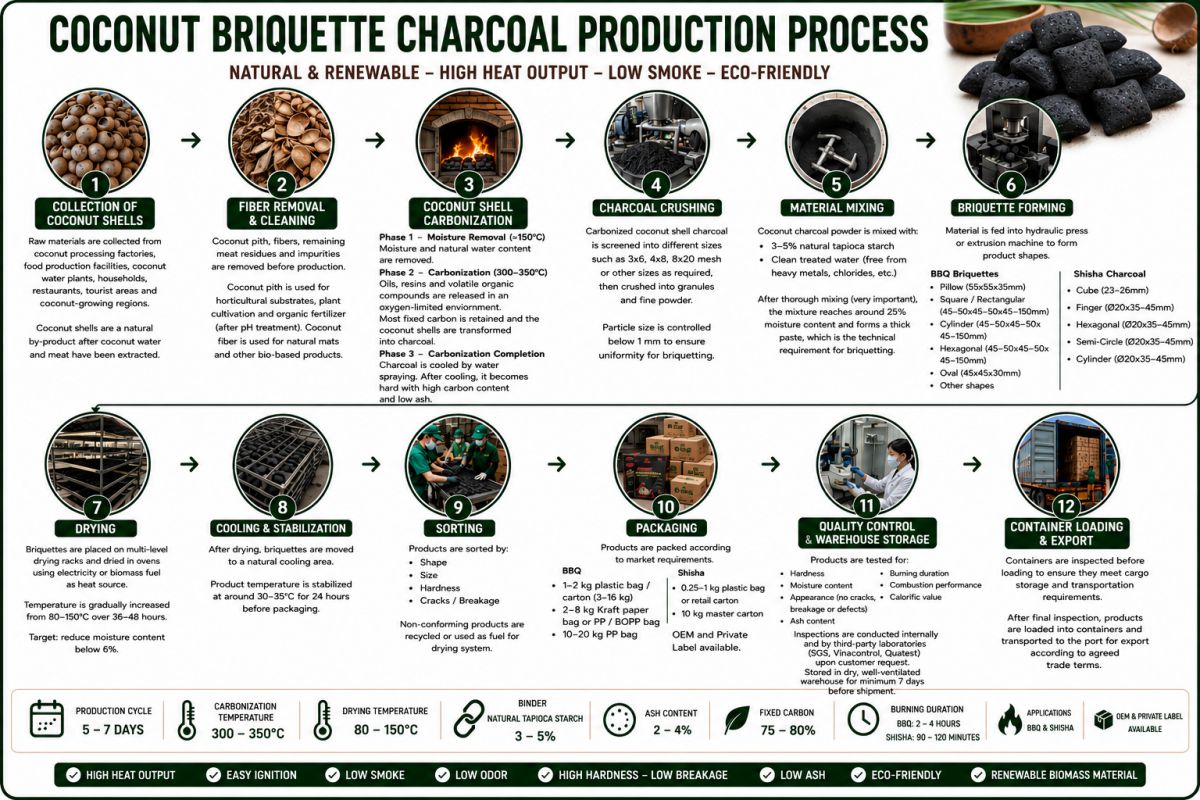
Coconut Briquette Charcoal is a compressed charcoal product manufactured from carbonized coconut shell charcoal combined with a small percentage of natural tapioca starch as a binding agent.
The production process consists of two main stages:
Carbonizing coconut shells to produce carbonized coconut shell charcoal.
Crushing, mixing, briquetting, and drying to produce finished coconut briquette charcoal products.
Thanks to the naturally high carbon content of coconut shells and the dense structure formed during the briquetting process, coconut briquette charcoal offers high heat output, easy ignition, user-friendly performance, low smoke emission, low odor, and is produced from renewable biomass resources.
The product is generally divided into two major categories based on end-use applications:
Shisha / Hookah Coconut Charcoal for premium markets.
BBQ Coconut Briquette Charcoal for general grilling and heating applications.
Step 1. Coconut Shell Collection
Raw materials are collected from coconut processing factories, food manufacturing facilities, coconut water processing plants, households, restaurants, tourist destinations, and coconut-growing regions after the coconut water and coconut meat have been utilized.
Coconut shells are a natural by-product generated during coconut processing activities.
Step 2. Fiber Removal & Cleaning
Residual coconut pith, coconut fiber, coconut meat residues, and other impurities are removed before production.
Coconut pith is a valuable biomass material commonly used for horticultural substrates, plant cultivation, and organic fertilizer production after pH treatment. Coconut fiber is widely used for manufacturing natural mats, bio-based materials, and various industrial products.
Step 3. Coconut Shell Carbonization
The coconut shells are loaded into carbonization kilns and processed through three main stages:
Phase 1 – Moisture Removal (Approximately 150°C)
Natural moisture and water content are gradually removed from the raw material.
Phase 2 – Carbonization (300–350°C)
Natural oils, resins, and volatile organic compounds are released from the coconut shell structure under oxygen-limited conditions.
During this stage, most of the fixed carbon is retained, and the coconut shells are transformed into charcoal.
Phase 3 – Carbonization Completion
The carbonized coconut shell charcoal is cooled using a controlled water-spraying system.
After cooling, the charcoal develops a hard structure with high carbon content and low ash content.
Step 4. Charcoal Crushing
The carbonized coconut shell charcoal is screened into common particle sizes such as 3×6, 4×8, 8×20 mesh and other grades depending on the intended application.
The charcoal is then crushed into fine granules and powder.
Particle size is typically controlled below 1 mm to ensure consistency and compliance with briquetting requirements.
Step 5. Material Mixing
The coconut charcoal powder is mixed with:
- 3–5% natural tapioca starch
- Clean treated water free from heavy metals, chlorides, and other contaminants that may affect product quality
Uniform mixing is a critical technical requirement for product quality.
Step 6. Briquette Forming
The prepared material is fed into hydraulic presses or extrusion systems to create the desired product shapes.
BBQ Coconut Briquettes
- Pillow Shape: 55 × 55 × 35 mm
- Square and Rectangular Blocks: 45–50 × 45–50 × 45–150 mm
- Cylindrical Shape: 45–50 × 45–50 × 45–150 mm
- Hexagonal Shape: 45–50 × 45–50 × 45–150 mm
- Oval Shape: 45 × 45 × 30 mm
- Other customized shapes upon request
- Cube: 23–26 × 23–26 mm
- Finger: Diameter 20 mm × Height 35–45 mm
- Hexagonal: Diameter 20 mm × Height 35–45 mm
- Semi-Circle: Diameter 20 mm × Height 35–45 mm
- Cylinder: Diameter 20 mm × Height 35–45 mm
Step 7. Drying
After briquetting, the products are placed on multi-level drying racks and transferred into drying chambers.
Heat may be supplied by electricity or biomass fuel systems.
Drying temperatures are gradually increased from approximately 80–150°C over a period of 36–48 hours.
The objective is to reduce product moisture content below 6%.
Step 8. Cooling & Stabilization
After drying, the charcoal is transferred to a cooling area for natural stabilization.
Product temperature is gradually reduced and stabilized at approximately 30–35°C over a period of 24 hours before packaging.
Step 9. Sorting
Products are sorted according to:
- Shape
- Dimensions
- Structural strength
- Cracks and breakage condition
Step 10. Packaging
Products are packed according to customer and market requirements.
BBQ Coconut Briquettes
- 1–2 kg plastic bags or carton boxes packed into 3–16 kg master cartons
- 2–8 kg Kraft paper bags or PP/BOPP bags
- 10–20 kg PP bags
- 0.25–1 kg plastic bags or retail cartons
- 10 kg master cartons
Step 11. Quality Control & Warehouse Storage
Finished products are inspected according to the following criteria:
- Hardness
- Moisture content
- Appearance (free from cracks, breakage, and defects)
- Ash content
- Burning duration
- Combustion performance
- Calorific value
Following approval, products are stored in dry and well-ventilated warehouses for a minimum of 7 days prior to shipment.
Step 12. Container Loading & Export
Containers are inspected before loading to ensure they meet cargo storage and transportation requirements.
After final inspection, the products are loaded into containers and transported to the port for export according to the agreed international trade terms.
THALOCA’s production network is strategically located near key raw-material regions throughout Vietnam to optimize transportation costs and maintain a stable supply chain. Main production areas include Hung Yen, Yen Bai, Vinh Long, Can Tho, Binh Phuoc, and Ca Mau.
Yes. THALOCA welcomes customers, partners, and inspection agencies to visit our facilities. We encourage customers to evaluate our production capacity, quality control system, packaging process, and supply capability before establishing long-term cooperation.
THALOCA exports to Japan, South Korea, Australia, New Zealand, Saudi Arabia, UAE, Qatar, Kuwait, the United Kingdom, Russia, Spain, Turkey, the United States, and other international markets.
Yes. Free product samples are available for quality evaluation. International courier charges are usually borne by the customer or negotiated case by case.
THALOCA supplies five main product groups: Wood Charcoal, Sawdust Charcoal, Coconut Charcoal Products, Binchotan-Style White Charcoal, and Household Biomass Fuels such as Wood Pellets and Wood Sawdust Briquettes.
Each product has unique characteristics depending on its raw material and production technology. Wood charcoal is made from natural firewood. Sawdust charcoal offers high calorific value and long burning time. Coconut charcoal is ideal for BBQ and shisha applications. Binchotan is the premium category with high carbon content, almost no smoke, minimal odor, and exceptional burning performance.
Depending on the product and market requirements, THALOCA can provide technical specifications, laboratory test reports, FSC, SGS, Vinacontrol, and other certifications requested by customers.
Yes. We cooperate with SGS and other independent inspection organizations designated by customers during production, before packing, or before container loading.
Since 2008, THALOCA has been supplying charcoal and biomass fuel products to customers across Japan, South Korea, Australia, the Middle East, Europe, and many other international markets.
Over the years, we have received a wide range of questions regarding products, quality standards, OEM services, export documentation, payment terms, logistics, and ordering procedures. To help customers quickly find the information they need, we have compiled the most frequently asked questions below.
If you cannot find the answer you are looking for, please feel free to contact the THALOCA team. We are always ready to provide support and recommend the most suitable solution for your business needs.